Cedar or Pine for a Privacy Fence in Northwest Arkansas
Both woods work here, but they age differently, and knowing how helps you pick the one you'll be happy with.
October 1, 2026 · 3 min read
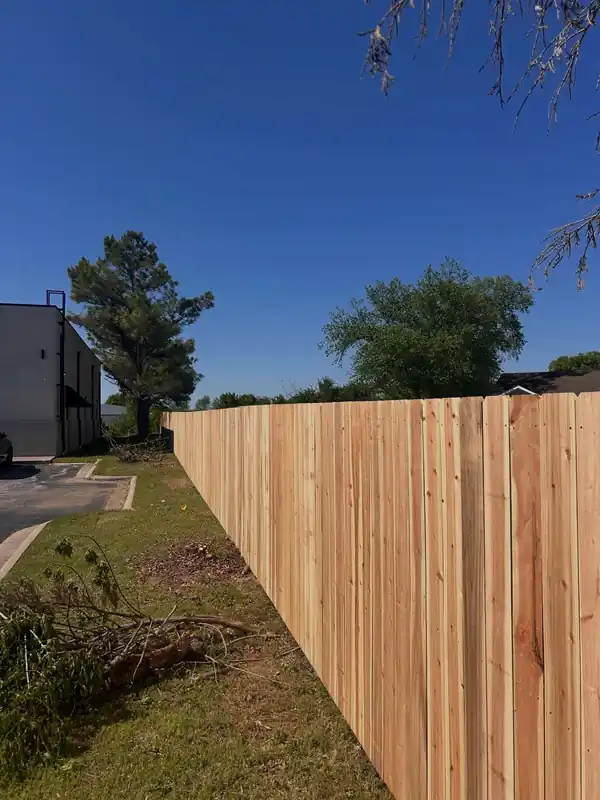
Almost every wood privacy fence we see in this part of Arkansas is one of two things: cedar or pressure-treated pine. Fence Pros NWA builds with both, and neither one is the wrong answer. They just behave differently once the install crew drives away, and that's what's worth understanding before you decide.
What cedar does well
Cedar is a naturally rot-resistant wood. It carries its own oils, which is why it holds up to moisture and insects without being soaked in preservative. It's also a relatively stable wood, so the boards tend to stay flatter and straighter than pine does, and you see fewer boards cupping or twisting out of line.
The color is the other draw. Fresh cedar has a warm red and tan tone that looks good on a new fence, and if you leave it unfinished it slowly weathers to a soft silver gray. Some people love that look and some don't. If you want to keep the red tone, you'll need to stain or seal it, and you'll need to redo that every few years.
What pressure-treated pine does well
Pressure-treated pine is ordinary pine that's been forced full of a preservative so it can sit outdoors without rotting out quickly. It's widely available and usually costs less per board than cedar, which makes it a sensible choice for a long run of fence around a big lot. Plenty of the pine fences we've built stand behind brick ranch houses and across wide backyards, and they do the job.
The tradeoff is movement. Treated boards often go up wet from the treatment process. As they dry in the sun they can shrink, cup, split at the ends or leave gaps that weren't there on day one. That isn't a defect, it's how the wood behaves, and it's the reason pine privacy fences can look a little rougher after the first summer.
How each one ages in our weather
Northwest Arkansas swings between humid summers, wet springs and freezes in winter. Wood sees all of it. Cedar tends to weather evenly and keeps its shape. Pine tends to move more in the first year or two and then settle down. Neither one is maintenance free, and any installer who says otherwise is selling you something.
One thing matters more than the pickets: the posts. Fences usually fail at ground level, where wood sits in wet clay and never fully dries. Whichever wood you choose for the boards, ask what is going in the ground and how it's set, because a great cedar fence on a weak post will lean just the same as a cheap one.
Staining and sealing
- Cedar can go unfinished and gray out, or you can stain it to hold the color. Either choice is fine, it's a matter of taste.
- Treated pine should dry out before you stain it. Ask your installer how long to wait, and follow the directions on the stain you buy.
- Whatever you use, make sure it's made for exterior wood, and plan on touching it up as it wears rather than waiting until it's bare.
Cost shows up at both ends of a fence's life. Pine usually costs less to install, and cedar often costs more at the start and asks for less correcting later. Neither one is a trick. Think about how long you plan to stay in the house and how much weekend upkeep you're willing to take on, and the answer often becomes obvious.
How to choose
If the fence is the first thing people see from the street, or it wraps the yard around a house you're proud of, cedar is usually worth the extra. You get a cleaner look, straighter boards and a fence that photographs well. If you need to cover a lot of linear feet on a budget, pine gives you real privacy at a lower cost and lasts well when it's installed properly and kept up.
You can also mix. Plenty of homeowners put cedar on the visible front and side runs and pine along the back. Whatever you choose, check with your city and your HOA before you commit to a height, a style or a stain color, since rules vary from one neighborhood to the next and it's far cheaper to ask first than to tear out a run.
If you're stuck between the two, call or text Sean at (479) 871-3942 and ask for a free estimate on both. Seeing the two numbers side by side, with the same layout and gates, makes the decision a lot easier than any article can.
Fence Pros NWA, (479) 871-3942
Call (479) 871-3942More articles
Why Fence Gates Sag, and What a Steel Frame Does About It
A gate is the one moving part on your fence, so it's the first place a cheap build shows.
Shadowbox, Board-on-Board or Dog-Ear: What You See from Both Sides
The name of the style tells you very little. What it looks like from each side of the fence tells you a lot.